Thursday, February 23, 2006
Second Week on VMP
Mom is still doing all right. Dr. Picozzi does a check-up
and bloodwork every week and determines whether she can
continue without a break. So far, her counts are fine.
The worst thing appears to be mouth ulcers and sores on
her lips. They prescribed a "magic mouthwash" that has
an anesthetic and we're trying various lip ointments including
biotene gel and chapstick for lip sores. She has moderate
nausea but this seems to be controlled by the three nausea
medications she is taking. They have started giving her
IV fluids an additional twice a week to make sure she is
hydrated. So far everything is fine - Dr. Picozzi said
week three and four are critical in terms of symptoms so
we hope that she continues to be able to tolerate the treatment.
The good news is we are about 40% done by now with the first
phase.

Sunday, February 12, 2006
First Week on VMP
My mother has finally begun the VMP with Dr. Picozzi. The first stage of
the VMP consists of 3 types of drugs combined with radiation. They inserted
a PICC line into my mother's arm which is a small catheter that runs from the
arm to just above the heart. This is used to infuse the chemo drugs and IV
fluids. They have hooked up a pump that my mother carries around with her
for continuous infusion of 5FU. She receives an IV bag of Cisplatin once
a week along with 3 bags of IV fluids to hydrate her. She receives
subcutaneous injections of Interferon Alpha three times a week. Finally,
she gets radiation for a few minutes every day. The first day of treatment
she received all 4 portions of the treatment. At night she suffered from
severe fever (up to 103) for several hours but Dr. Picozzi said that is not
an uncommon side effect of the interferon especially on the first shot. Her
second shot was much better and she didn't get feverish at all. Mostly, she
is naseous and fatigued and has been sleeping a lot. She's already not doing
well so we're quite worried it's going to get really hard towards the latter
stages. I'm hoping she doesn't suffer too much.
Monday, January 16, 2006
Decision
 My mother has decided to go with Picozzi at Virginia Mason
(with some strong hinting on our parts). I think this is the
right decision based on the preliminary results they have had
there but I'm really apprehensive about how difficult
it is going to be for her. We're now setting up the logistics.
She'll probably be beginning treatment at week 10 which makes me
a little nervous but Picozzi seemed to think that would be OK.
We'll probably do the latter phases locally or in California.
My mother has decided to go with Picozzi at Virginia Mason
(with some strong hinting on our parts). I think this is the
right decision based on the preliminary results they have had
there but I'm really apprehensive about how difficult
it is going to be for her. We're now setting up the logistics.
She'll probably be beginning treatment at week 10 which makes me
a little nervous but Picozzi seemed to think that would be OK.
We'll probably do the latter phases locally or in California.
Friday, January 13, 2006
Consultation with Dr. Laheru
 We went back to Johns Hopkins to finally meet Dr. Laheru. This is the
last oncologist we have on our list to meet. My mother asked him what
kind of name "Laheru" is and he replied that it is Indonesian. Dr. Laheru
went over my mother's history and then went over his recommended treatment
plan. This would be radiation with Xeloda and possibly Tarceva followed
by Gemcitabine alone. One thing I felt is that the Hopkins folks stress
that my mother's prognosis is very good from surgery alone and that this may
have some implications for her treatment plan.
Dr. Laheru also mentioned in response to our question that Xeloda
was probably equivalent to 5FU but more convenient. He said that if you
drew and tested blood after somebody had done 5FU vs. Xeloda, no doctor would
be able to detect any difference. He also mentioned that the levels of
Xeloda that they would give would also be treating the cancer "systemically"
right from the start.
We went back to Johns Hopkins to finally meet Dr. Laheru. This is the
last oncologist we have on our list to meet. My mother asked him what
kind of name "Laheru" is and he replied that it is Indonesian. Dr. Laheru
went over my mother's history and then went over his recommended treatment
plan. This would be radiation with Xeloda and possibly Tarceva followed
by Gemcitabine alone. One thing I felt is that the Hopkins folks stress
that my mother's prognosis is very good from surgery alone and that this may
have some implications for her treatment plan.
Dr. Laheru also mentioned in response to our question that Xeloda
was probably equivalent to 5FU but more convenient. He said that if you
drew and tested blood after somebody had done 5FU vs. Xeloda, no doctor would
be able to detect any difference. He also mentioned that the levels of
Xeloda that they would give would also be treating the cancer "systemically"
right from the start.
We also talked a lot about the GVAX vaccine. Apparently, they are planning a booster study that they are going to open sometime later this year. He said that my mother would be eligible to receive the vaccine under this study although this would happen after she finishes her chemotherapy. I asked if there were any ways to offer it sooner and he said unfortunately there was no way that would be possible. I really hope that this study gets launched and that the criteria are such that many people can benefit from it.
He mentioned that Hopkins might be able to offer the VMP but it seems like it might be a better idea to do the first part of the protocol at Virginia Mason since they are so experienced with it. We could do the latter part at Johns Hopkins. He wouldn't recommend using Avastin as that is too toxic.
My mother really liked Dr. Laheru and mentioned afterwards a few times that we should use Johns Hopkins. As I mentioned, the last one always seems to be winning. Dr. Laheru stressed that treatment should begin soon (we are at 6.5 weeks post whipple). We now have to make the big decision this weekend.
Dr. Cameron sent us a very thoughtful thank you note for the scarf today.
Monday, January 09, 2006
Consultation with Dr. Picozzi
 On January 4 we went to Seattle to meet Dr. Picozzi. Mom did very well on the trip. We stayed at the Inn at Virginia Mason which is attached directly
to the hospital. The restaurant at the Inn was very good but the prices reflect
that. Anne had scheduled us for bloodwork, a CT scan, a chest X-ray and finally
a consultation with Dr. Picozzi. Virginia Mason seemed small in comparison with
Hopkins but the atmosphere in the Buck building was very pleasant. The cafeteria
was reasonable but on that day the food looked better than it actually tasted.
At the Hopkins cafeteria I thought the food tasted better than it looked.
On January 4 we went to Seattle to meet Dr. Picozzi. Mom did very well on the trip. We stayed at the Inn at Virginia Mason which is attached directly
to the hospital. The restaurant at the Inn was very good but the prices reflect
that. Anne had scheduled us for bloodwork, a CT scan, a chest X-ray and finally
a consultation with Dr. Picozzi. Virginia Mason seemed small in comparison with
Hopkins but the atmosphere in the Buck building was very pleasant. The cafeteria
was reasonable but on that day the food looked better than it actually tasted.
At the Hopkins cafeteria I thought the food tasted better than it looked.
We finally had our chance to talk to Dr. Picozzi. He started off by asking us about our backgrounds (schools, jobs, etc.). He seemed really interested in this and I'm not sure if it was because he wanted to make us feel comfortable (people like talking about themselves) or because he liked to get to know his patients. My father, sister and Dr. Picozzi had all gone to Yale and he seemed very pleased with that.
Dr. Picozzi mentioned several things of interest:
- Without adjuvant treatment, the cancer recurs locally 30-60% of the time and recurs systemically 80% of the time.
- It's better to treat systemically sooner rather than later (VMP does both at early stage).
- The standard chemotherapy vs. standard chemoradiotherapy give about the same survival rates.
- He's wary about Xeloda as opposed to using 5FU since there have been no tests to confirm that it is as effective.
- VMP gives long term survival of 40-50%.
- Results at Virginia Mason may be slightly better than those in the initial publication.
- He's made the VMP less toxic recently and believes that the side effects are no worse than standard treatment if you do the VMP at Virginia Mason with their supportive care.
- Only one person dropped out and there have been no deaths.
- Average age of patients treated under VMP is 64.
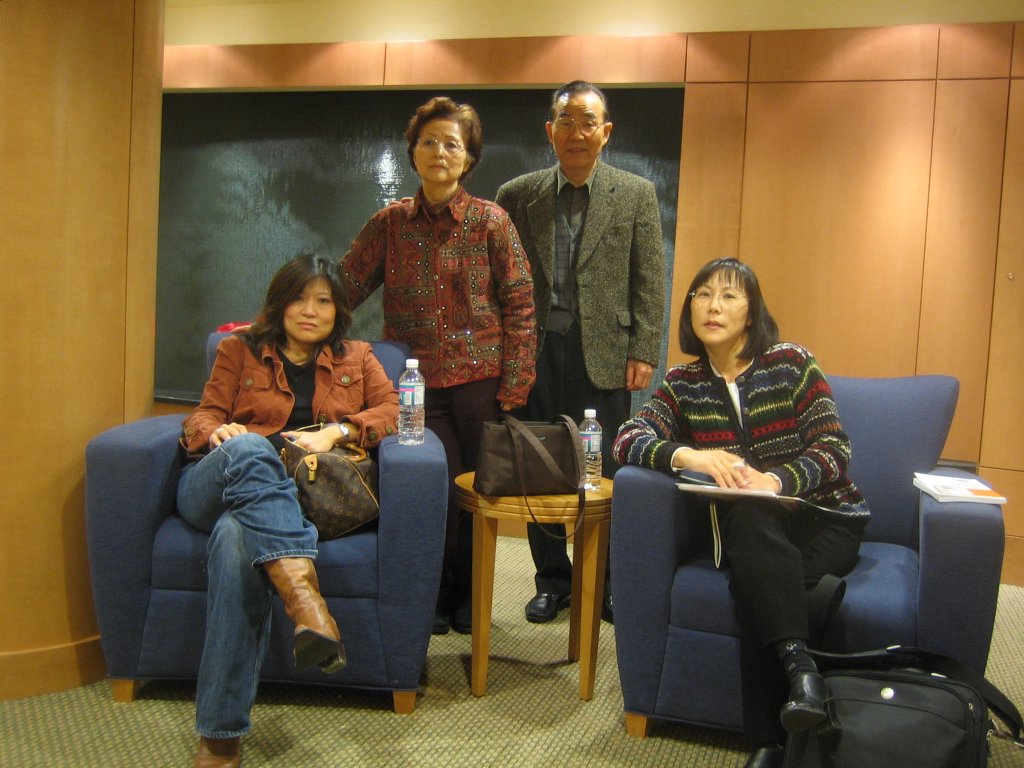
This is the serene and comfortable waiting room at Virginia Mason.
Doctor Picozzi also mentioned something interesting about my Mom's condition we hadn't heard before. He said that her CA 19-9 pre-surgery was very high - 801.7 and that some institutions would not even operate with such a high number. This might indicate that the chances of some "occult cancer" being around is higher. However, he said that her current CA 19-9 level of 15.7 was a good sign that maybe all the cancer was removed. He also mentioned he had floated the idea of starting a trial with Laheru where they would layer the GVAX vaccine on top of the VMP protocol. I think that would be a fantastic idea.
We were pretty happy with the visit. Dr. Picozzi seemed very knowledgable and very kind. We seem to like the Doctor best that we have seen most recently for some reason :->. If it's true that doing the VMP now is not much more difficult than standard chemoradiation, then it seems like a great approach. My mother definitely needed to hear from Picozzi that the protocol was not too toxic for her and that it was not much more difficult than the standard treatment. We spent the rest of the day looking for a place to stay should we decide to come to Virginia Mason for treatment.
Sunday, January 01, 2006
New Years and Mom's 70th Birthday
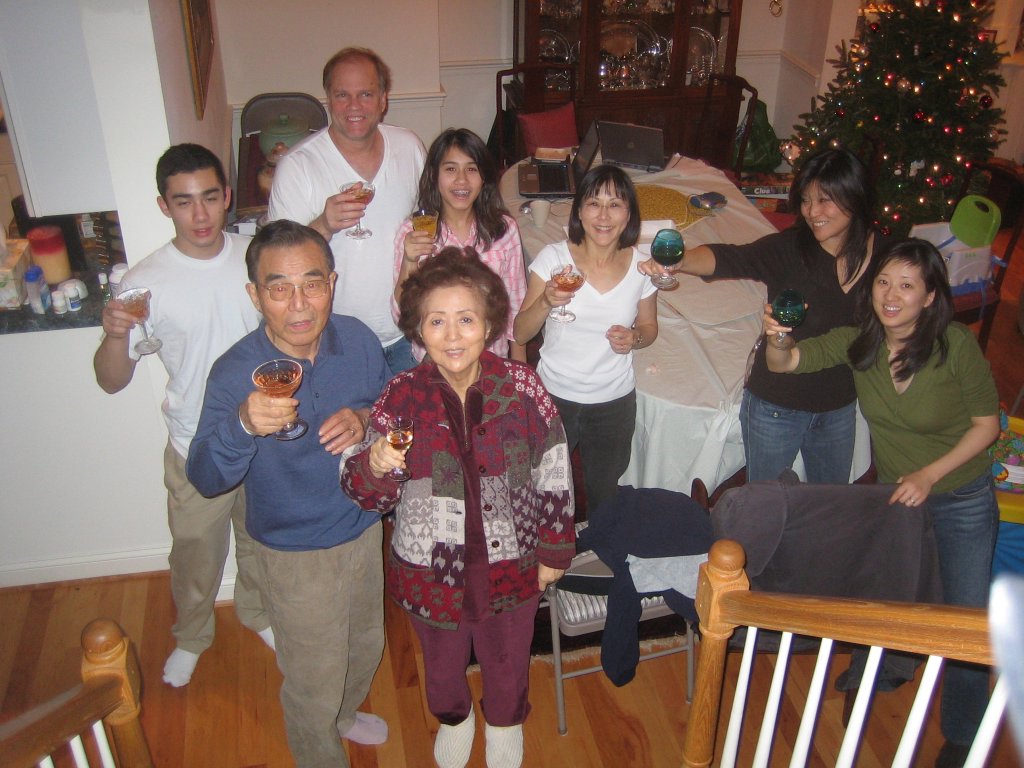
 My mother is a New Years baby so we celebrated New Years and my mother's
70th birthday on the same day! She has been doing great since Christmas - just
in time to enjoy the holidays.
My mother is a New Years baby so we celebrated New Years and my mother's
70th birthday on the same day! She has been doing great since Christmas - just
in time to enjoy the holidays.
Wednesday, December 28, 2005
Consulation with Dr. Herman
On December 28 we went to Johns Hopkins to meet with Dr. Herman.
Dr. Herman is a radiation oncologist at Johns Hopkins. He and his
resident Dr. Fox have been really helpful and accessable since we
met them in the hospital after my mother's Whipple procedure. Dr.
Herman seems like the kind of guy you could easily go and grab a beer
with.
My mother had her first post-operative CT scan and bloodwork done in the morning at the Weinburgh building. We met Dr. Herman and Dr. Fox afterwards. As usual, he was really helpful:
My mother had her first post-operative CT scan and bloodwork done in the morning at the Weinburgh building. We met Dr. Herman and Dr. Fox afterwards. As usual, he was really helpful:
- He mentioned Hopkins had participated in the VMP trial but stopped after 4 patients because the coordinator quit and it was a high maintenance trial. Of the 4 patients, 2 were still completing the trial but the other 2 had already had recurrance. One of the knowledgable nurses mentioned the VMP seemed to be about twice as hard as the normal regimen but that people had recovered very well a month after the intensive part was completed.
- Herman recommended talking directly with Dr. Laheru regarding the treatment plan to be offered by Hopkins. We had finally set up an official consultation with Dr. Laheru so we would just wait to see him then.
Monday, December 26, 2005
Christmas
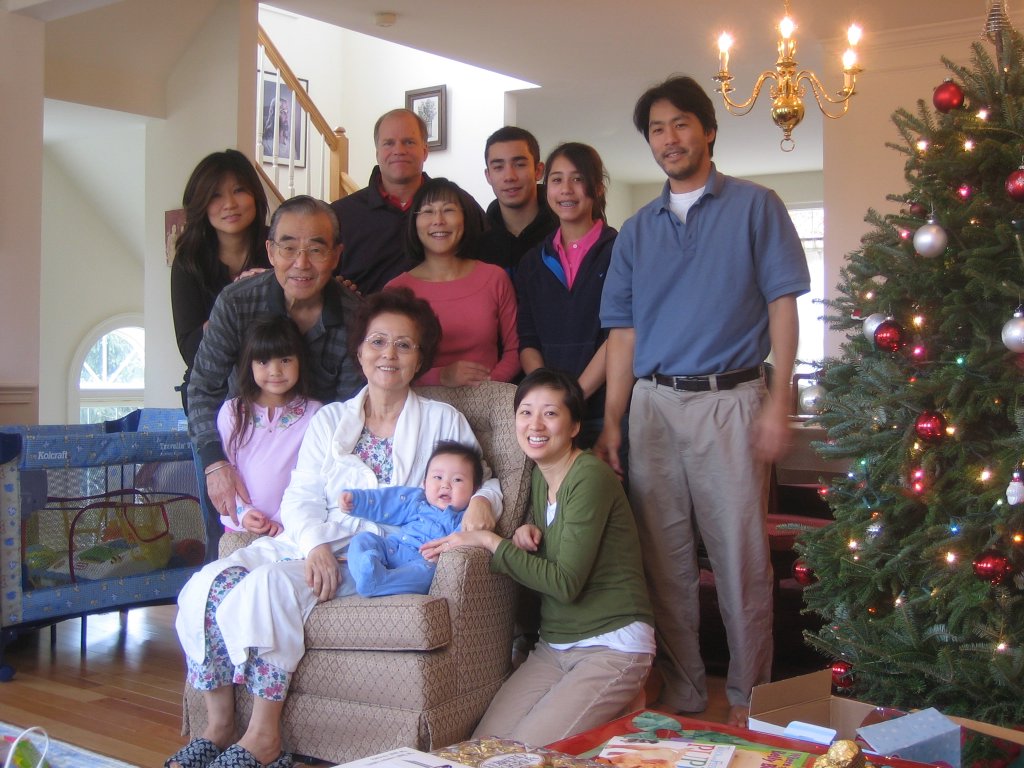 The whole family got together for Christmas. Although Mom had one bout of
vomiting after we saw Dr. Cameron on the 21st she had felt better from the
24th just in time to celebrate Christmas!
The whole family got together for Christmas. Although Mom had one bout of
vomiting after we saw Dr. Cameron on the 21st she had felt better from the
24th just in time to celebrate Christmas!
Wednesday, December 21, 2005
Follow Up with Dr. Cameron
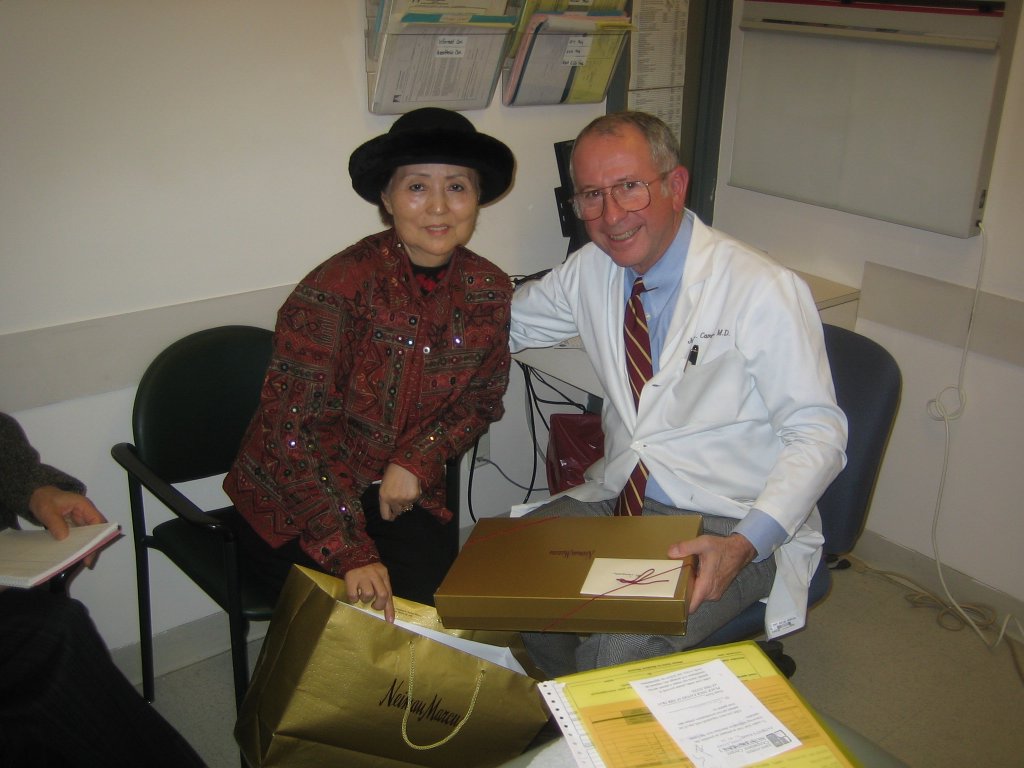 On December 21 we went for our 2 week follow-up visit with Dr. Cameron.
My mother had bought him a scarf and she had bought a pen for Dr. Meneshian (Dr. Cameron's fellow). Grace had gone through a fair amount of pain buying and returning things and working with my Mom over the phone from the mall while they finalized what to get.
On December 21 we went for our 2 week follow-up visit with Dr. Cameron.
My mother had bought him a scarf and she had bought a pen for Dr. Meneshian (Dr. Cameron's fellow). Grace had gone through a fair amount of pain buying and returning things and working with my Mom over the phone from the mall while they finalized what to get.
We arrived at 1pm and ended up waiting 2 hours to see him. We realized that Dr. Cameron has the following brilliant (for him) scheduling strategy: Tell all patients to arrive at exactly the same time (1pm) and then it's first come first serve to see him. I suspect he does this so that he maximizes the use of his time and because he can (he is one of the best surgeons in the world). I doubt any of his patients complain. He came in and looked at my mother's incision and said: "Your incision looks great - you must have had an excellent surgeon". I bet he says that to all his patients :->.
We asked him about his recommendation for adjuvant therapy and he confirmed what we were thinking. He mentioned that the two "bright spots" in this area are Dr. Picozzi's Virginia Mason Protocol and Dan Laheru's vaccine. He had mentioned though that the VMP was very toxic and that he wouldn't hesitate to send somebody to Seattle if they were in their 50s. But he said we should definitely still see Dr. Picozzi since I told him we already had an appointment lined up. My Mom, who has been really scared of chemotherapy and radiation has clung to those words in defense and has kept repeating that the VMP is for younger people. We've asked her to keep an open mind and wait to talk to Dr. Picozzi.
Next came the all important gift giving portion of the visit. My mother gave Dr. Cameron the gift and asked him to give the pen to Dr. Meneshian. She was really worried because she originally got the pen for Dr. Cameron and the scarf for Dr. Meneshian. But my father remembered that Dr. Cameron already had a really fancy nice pen so she decided to switch them. However, the pen was more expensive than the scarf and my mother was really worried for the next few days that somehow Dr. Cameron would figure it out and get upset. My mother tends to worry a lot about these kinds of things.
In retrospect, we're really thankful that we were able to have Dr. Cameron handle my mother's Whipple procedure. This is probably among the most difficult procedures and Dr. Cameron has done more of these than anybody alive. He was chief of surgery at JHH. Dr. Marshall called him "The Master". Dr. Picozzi called him "The best surgeon in the world". An ICU nurse mentioned the ICU was getting full and they were moving patients out but my Mom was OK since she was Dr. Cameron's patient. Another nurse mentioned that none of Dr. Cameron's patients are supposed to get infections or complications so they work very hard to avoid them. He puts many of his patients in beautiful Marburg. And most importantly, there is a huge imposing painting of him in the lobby of Blalock.
Mom loves telling people we had the best surgeon in the world and that we stayed on the same floor with famous people and an Arab prince. I think we all derive a lot of psychic benefit from that.
Monday, December 19, 2005
The Dream
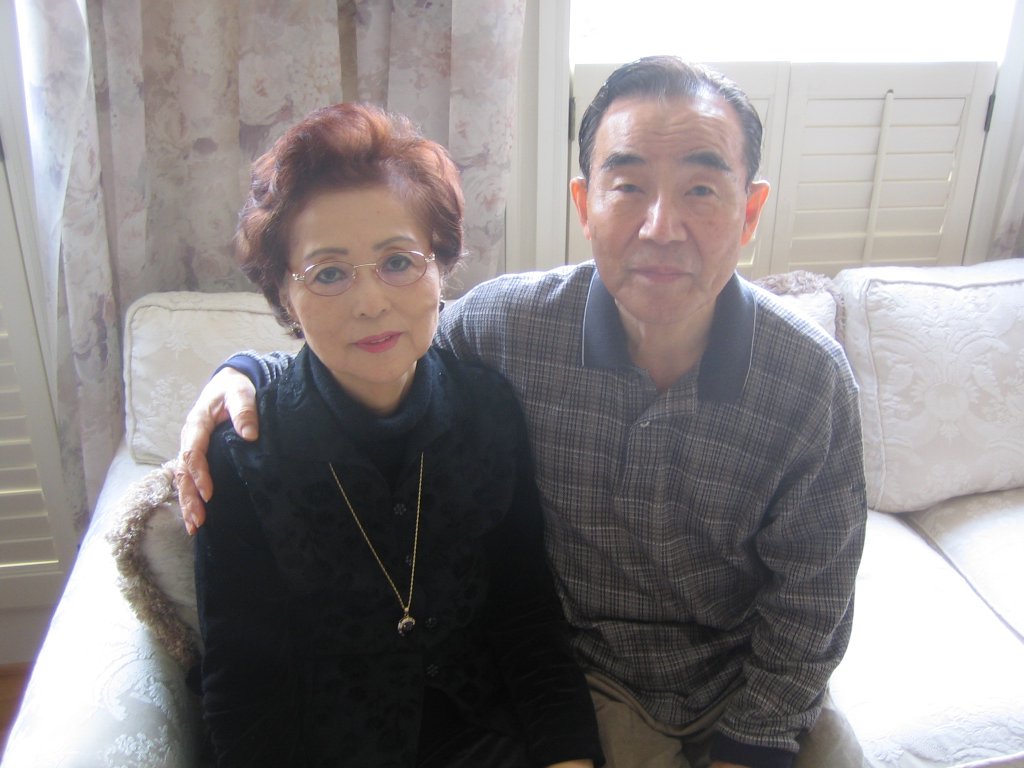 My mother had been feeling miserable with nausea and vomiting since the Whipple procedure. On the 19th she took a nap and woke up from a very interesting dream.
She said she dreamed that she was going to the bathroom (#2) and that lots of
stuff was going down (as she described it). She woke up feeling a lot better
and this marked a huge turning point in her recovery!
My mother had been feeling miserable with nausea and vomiting since the Whipple procedure. On the 19th she took a nap and woke up from a very interesting dream.
She said she dreamed that she was going to the bathroom (#2) and that lots of
stuff was going down (as she described it). She woke up feeling a lot better
and this marked a huge turning point in her recovery!
Friday, December 16, 2005
Consultation with Dr. Marshall
My sister Grace had heard about Dr. Marshall through a business contact.
He is a famous professor/oncologist at Georgetown's Lombardi Cancer Center.
Georgetown is about 45 minutes from
my parent's place so it is one of the "local" oncologist options.
In the morning prior to leaving, my mother had a terrible sharp pain in her stomach. I was worried she wouldn't make it but she took some Malox and somehow she found the strength to go with us. We were anxious for her to come with us because we didn't want to miss this opportunity to talk to Dr. Marshall.
Dr. Marshall and his assistant Dr. Amy Rankin were extremely nice. They made us feel very well taken care of which was a nice contrast to relying on the surgeons. Dr. Marshall was very concerned about my Mother's condition and prescribed some IV fluids. A blood test revealed her potassium was very low so they also infused some potassium. He prescribed a lot of medication to help my mother feel better including fentanyl patches (better to control pain than using oral meds if you are vomiting), potassium supplements, an anti-nausea steroid, etc. It's a good thing my mother went to see Dr. Marshall that day because she was really dehydrated and the IV fluids made her feel a lot better. One advantage of seeing an oncologist early on after the Whipple is that you have somebody who can prescribe meds and take care of you. We really liked Dr. Marshall because he paid a lot of attention to my mother's comfort.
We also discussed his take on adjuvant therapy. His philosophy boils down to starting with chemotherapy using Gemcitabine. Radiation would only possibly come later on after several months. He also believes in long term maintenance using a low dose of some medication (I forget which). To support his approach he referred to the European study which showed that radiation was of questionable benefit and that chemotherapy alone proved superior. The Hopkins doctors had discounted this study saying that the radiation may not have been applied effectively. Dr. Marshall also believes that it is more important to focus on treating "systemically" to prevent distant metastasis first rather than treating locally to prevent local advance. The reason he presented is that the distant metastases are what kill you. His take on the Hopkins approach was that they had a very strong radiation oncology department so this explains why it would figure prominently in the treatment plan. We also asked him about his opinion on the Virginia Mason protocol. He said that it was a single institution study that hadn't been verified and that there was a tradeoff with the significantly higher toxicity.
So the plot thickened now with three major options on the table:
Dr. Marshall and his assistant Dr. Amy Rankin were extremely nice. They made us feel very well taken care of which was a nice contrast to relying on the surgeons. Dr. Marshall was very concerned about my Mother's condition and prescribed some IV fluids. A blood test revealed her potassium was very low so they also infused some potassium. He prescribed a lot of medication to help my mother feel better including fentanyl patches (better to control pain than using oral meds if you are vomiting), potassium supplements, an anti-nausea steroid, etc. It's a good thing my mother went to see Dr. Marshall that day because she was really dehydrated and the IV fluids made her feel a lot better. One advantage of seeing an oncologist early on after the Whipple is that you have somebody who can prescribe meds and take care of you. We really liked Dr. Marshall because he paid a lot of attention to my mother's comfort.
We also discussed his take on adjuvant therapy. His philosophy boils down to starting with chemotherapy using Gemcitabine. Radiation would only possibly come later on after several months. He also believes in long term maintenance using a low dose of some medication (I forget which). To support his approach he referred to the European study which showed that radiation was of questionable benefit and that chemotherapy alone proved superior. The Hopkins doctors had discounted this study saying that the radiation may not have been applied effectively. Dr. Marshall also believes that it is more important to focus on treating "systemically" to prevent distant metastasis first rather than treating locally to prevent local advance. The reason he presented is that the distant metastases are what kill you. His take on the Hopkins approach was that they had a very strong radiation oncology department so this explains why it would figure prominently in the treatment plan. We also asked him about his opinion on the Virginia Mason protocol. He said that it was a single institution study that hadn't been verified and that there was a tradeoff with the significantly higher toxicity.
So the plot thickened now with three major options on the table:
- Hopkins approach: radiation w/ Xeloda followed by chemo w/ Gemcitabine (maybe Tarceva)
- Georgetown approach: chemo w/ Gemcitabine maybe followed later with radiation.
- Virginia Mason approach: radiation w/ 5FU/Cisplatin/Interferon followed by Gemcitabine (maybe Erbitux)
Thursday, December 15, 2005
Harassing the Surgeons
I definitely wore out my welcome with the GI Gold oncall team at JHH. They
had given me a sheet that said to call if my mother experienced nausea,
vomiting, fever, etc. So I dutifully called every time she vomited (which
was really frequent for the first 2 weeks after the Whipple). At first they
would return my calls fairly regularly. After about a week though, I never heard
back from them. I suppose I got blacklisted.
Also, I had been calling Dr. Cameron's assistant Bonnie periodically to ask for appointments, prescriptions and other misc. things. She was also our first point of contact when my mother had an issue during business hours. One morning, at around 6 am I called because my mother had vomited a lot. In the past, when Bonnie was not around, Cameron's line would be routed to some other assistant who would cover for her. So this morning, when a man answered the line, I asked for Bonnie and he gruffly answered: "If you call back at 8:30, you can talk to Bonnie". Then he proceeded to quickly hang up before I had a chance to say anything. As I hung up, it dawned on me that that was Dr. Cameron! He had never answered his line before so I just found it completely unexpected that he would be picking up on his own phone line.
I think it's best overall not to rely too heavily on the surgeons for post-operative care. They are more than happy to hand you off to somebody else. It's probably a good idea to build a relationship early with an oncologist or other kind of doctor who can care for the patient. I understand it too - they are too busy doing surgery.
Also, I had been calling Dr. Cameron's assistant Bonnie periodically to ask for appointments, prescriptions and other misc. things. She was also our first point of contact when my mother had an issue during business hours. One morning, at around 6 am I called because my mother had vomited a lot. In the past, when Bonnie was not around, Cameron's line would be routed to some other assistant who would cover for her. So this morning, when a man answered the line, I asked for Bonnie and he gruffly answered: "If you call back at 8:30, you can talk to Bonnie". Then he proceeded to quickly hang up before I had a chance to say anything. As I hung up, it dawned on me that that was Dr. Cameron! He had never answered his line before so I just found it completely unexpected that he would be picking up on his own phone line.
I think it's best overall not to rely too heavily on the surgeons for post-operative care. They are more than happy to hand you off to somebody else. It's probably a good idea to build a relationship early with an oncologist or other kind of doctor who can care for the patient. I understand it too - they are too busy doing surgery.
Post-Whipple Misery
The day my mother was discharged she felt fairly nauseous. We asked for some
anti-nausea medication but were told that they don't like to prescribe
that as it may mask real problems. Once we got home things got pretty bad.
For about two weeks my mother could barely get out of bed because of
nausea. Every few days she would vomit what seemed like all the fluids and
food she had managed to get down for the last few days. We were really
worried that there was some kind of blockage. At one point Dr. Meneshian was
ready to re-admit my mother but we heard the next day that Dr. Cameron
had nixed that idea. At least he prescribed metoclopramide which seemed
to help with the nausea.
My father also went through a lot trying to keep my mother comfortable. For example, he had to really strive to meet my mother's extremely exacting standards for food preparation. Eventually, he resorted to bringing the ingredients up to her and letting her determine how much of each to add so that she would not be able to accuse him of adding too much or little of something.
My father also went through a lot trying to keep my mother comfortable. For example, he had to really strive to meet my mother's extremely exacting standards for food preparation. Eventually, he resorted to bringing the ingredients up to her and letting her determine how much of each to add so that she would not be able to accuse him of adding too much or little of something.
Wednesday, December 14, 2005
Consultation with Dr. Patel
My sister Grace and I went to visit Dr. Patel, an oncologist in Fairfax.
This was our "very local" oncologist option because she's about 20 minutes
from our parent's house. My mother was unable to go because she was feeling so ill. When we showed up without the patient they were a little confused but we were able to eventually see Dr. Patel. Dr. Patel was very kind and explained things very nicely to us. She offered the standard treatment of radiation with Xeloda followed
by chemotherapy with Gemcitabine. We asked her about the VMP and
she rated the VMP as an 8 out of 10 on the difficulty scale whereas the standard treatment was a 2.
Monday, December 12, 2005
Next Steps and Adjuvant Therapy
So far, everything was going as well as it could go I suppose. We felt
lucky that our Mother was able to have the Whipple and that her path report
came out reasonably good. However, the odds are very high for a recurrance
with surgery alone. The stats seem to indicate an 80-90% recurrance rate for
surgery alone. Now we started to investigate the different adjuvant treatments
available.
This part was very confusing. We spent a lot of time on the web and also calling up different institutions that were running clinical trials. One survivor from the Hopkins message board was also very kind to share her experiences with the Virginia Mason Protocol. The two things that stood out in our research were Dr. Picozzi's Virginia Mason Protocol and the Hopkins GVAX Vaccine. Both of these treatments have had very interesting preliminary results from single institution trials. Standard treatment seems to provide overall 5 year survival rate of about 15-20%. Johns Hopkins has data showing that resected patients without spread have 5 year survival of 40%. I'm not sure if my mother falls into that category. The Virginia Mason Protocol (VMP) shows an overall 5 year survival rate of about 45-50%. The patients in the study also mostly had poor pathology reports so that seemed pretty impressive. The Hopkins Vaccine showed 1 and 2 year survival at rates even better than the VMP. The downside that we have heard about the VMP is that it is very toxic and difficult to get through. The downside with the GVAX vaccine is that it does not seem to be available at the moment. The other two drugs that sounded interesting were Avastin and Tarceva. Both of these have had some success with treating advanced pancreatic cancer and are currently in testing for adjuvant therapy.
The Hopkins oncologists were recommending what I consider fairly standard treatment. They recommended radiation with Xeloda followed by chemotherapy using Gemcitabine. We could participate in a trial to add Tarceva as well.
We decided to set up appointments with oncologists at Georgetown, Johns Hopkins, Virginia Mason and locally at Fairfax. It was time to go oncologist shopping.
Our mother has been very anxious about the chemo plan. But she's preparing herself and has already bought a very nice wig.
This part was very confusing. We spent a lot of time on the web and also calling up different institutions that were running clinical trials. One survivor from the Hopkins message board was also very kind to share her experiences with the Virginia Mason Protocol. The two things that stood out in our research were Dr. Picozzi's Virginia Mason Protocol and the Hopkins GVAX Vaccine. Both of these treatments have had very interesting preliminary results from single institution trials. Standard treatment seems to provide overall 5 year survival rate of about 15-20%. Johns Hopkins has data showing that resected patients without spread have 5 year survival of 40%. I'm not sure if my mother falls into that category. The Virginia Mason Protocol (VMP) shows an overall 5 year survival rate of about 45-50%. The patients in the study also mostly had poor pathology reports so that seemed pretty impressive. The Hopkins Vaccine showed 1 and 2 year survival at rates even better than the VMP. The downside that we have heard about the VMP is that it is very toxic and difficult to get through. The downside with the GVAX vaccine is that it does not seem to be available at the moment. The other two drugs that sounded interesting were Avastin and Tarceva. Both of these have had some success with treating advanced pancreatic cancer and are currently in testing for adjuvant therapy.
The Hopkins oncologists were recommending what I consider fairly standard treatment. They recommended radiation with Xeloda followed by chemotherapy using Gemcitabine. We could participate in a trial to add Tarceva as well.
We decided to set up appointments with oncologists at Georgetown, Johns Hopkins, Virginia Mason and locally at Fairfax. It was time to go oncologist shopping.
Our mother has been very anxious about the chemo plan. But she's preparing herself and has already bought a very nice wig.
Wednesday, December 07, 2005
Recovering at the Marburg Pavilion
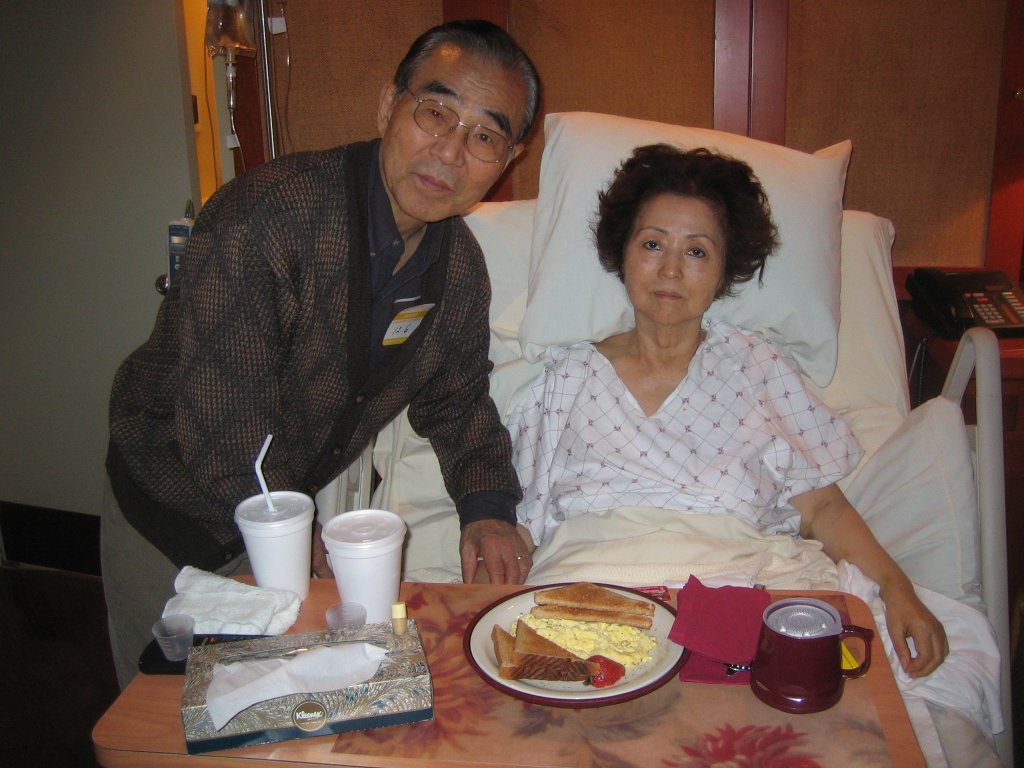 One really nice thing about being a patient of Dr. Cameron is that his patients
are sometimes put in the Marburg Pavilion (I'm not sure if this happens all
the time though and probably depends on availability). Marburg is the luxury
section of the hospital and it really is beautiful. There are hard wood floors
and lots of wood paneling. The nurse staff is really kind and attentive. There's
also a very comfortable guest room with couches, a TV, coffee, tea, snacks and most importantly a computer. I did a lot of research on adjuvant therapy on the computer. While we were there we saw a very famous celebrity and also an arab prince with his entire entourage!
One really nice thing about being a patient of Dr. Cameron is that his patients
are sometimes put in the Marburg Pavilion (I'm not sure if this happens all
the time though and probably depends on availability). Marburg is the luxury
section of the hospital and it really is beautiful. There are hard wood floors
and lots of wood paneling. The nurse staff is really kind and attentive. There's
also a very comfortable guest room with couches, a TV, coffee, tea, snacks and most importantly a computer. I did a lot of research on adjuvant therapy on the computer. While we were there we saw a very famous celebrity and also an arab prince with his entire entourage!
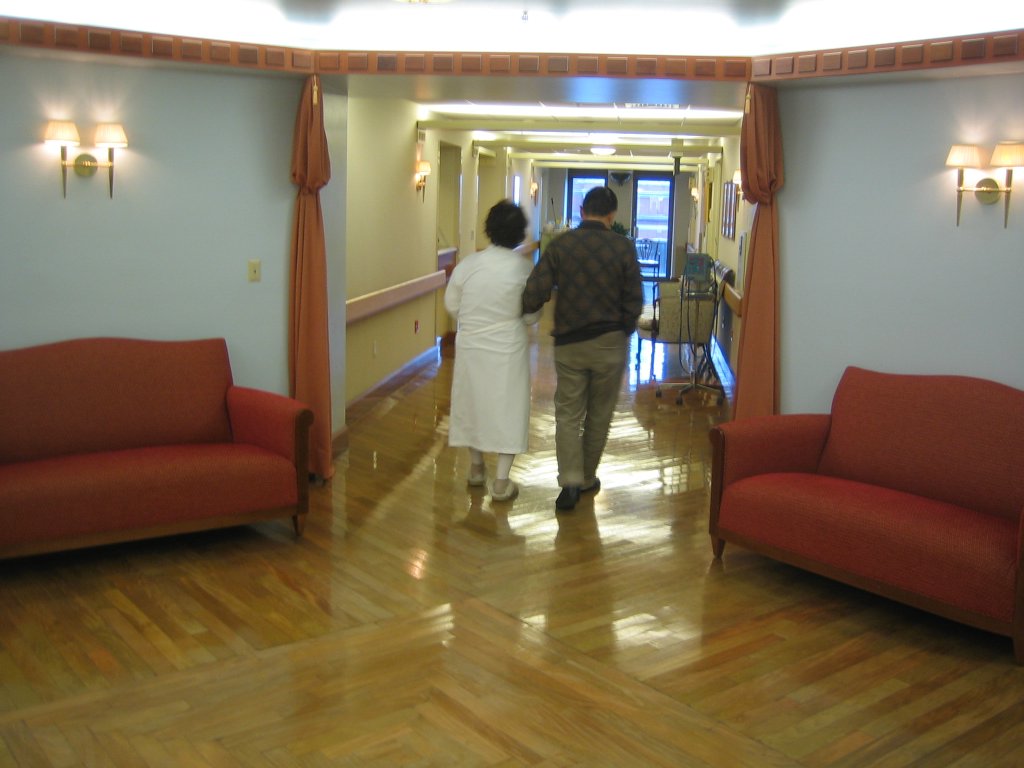
My Mom seemed to recover quite quickly while we were in the hospital. She was doing well with her breathing exercises and walking (which is very important). She had started to eat a little bit of solid food after several days. Her biggest problem was nausea but they kept that under control with some medication.
Dr. Cameron is a very early riser. He would usually come by around 5:30 am to visit my Mother. He would breeze in and generally say to my Mother - "You're doing great" and breeze out. Sometimes he would be with Dr. Meneshian and some other fellows or residents. During my Mother's stay, Dr. Cameron left to go to a conference. When Dr. Cameron was not around I noticed that Dr. Meneshian would do his rounds at around 9am. I'm sure it's nice to have a break when the boss goes out of town.
Friday, December 02, 2005
Pathology Report
After the Whipple, we waited anxiously to hear about my mother's pathology
report. They take all the removed tissue to the lab and perform tests on
it to see how well the surgery was done and whether there was any spread.
Getting the results is a pretty scary moment because this will give you an
idea of how advanced the cancer is. On Dec. 2 we finally got the results.
- 3.5 cm tumor on pancreatic head of type ductal adenocarcinoma
- moderately differentiated
- lymph nodes negative for tumor
- margins negative for tumor
- perineural invasion present
Tuesday, November 29, 2005
The Whipple Procedure
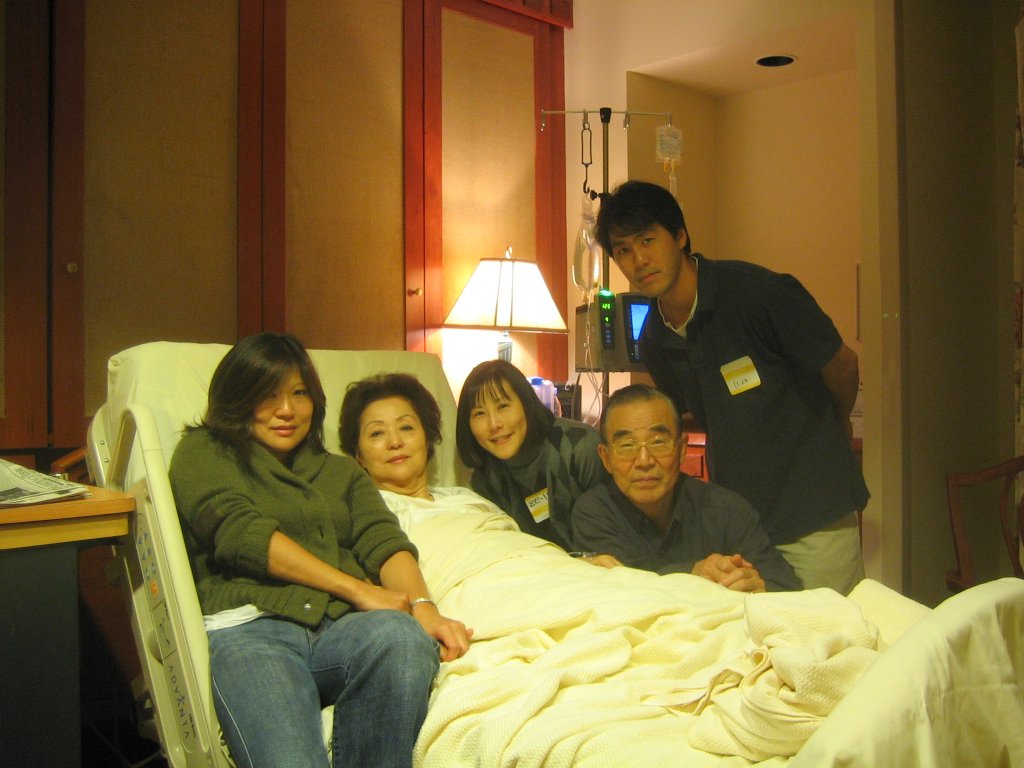 This is our family the day before my mother's Whipple.
Dr. Cameron scheduled my mother's Whipple Procedure for November 29, 2005. My sister Linda said "pancreaticoduodenectomy" to Dr. Cameron and he was very impressed. I'm sure the surgeons and oncologists have a good time hearing people mispronounce all the crazy procedure and drug names. The Whipple itself is very complicated. It can take anywhere from 6 to 10 hours.
My mother was really scared about the surgery and mentioned several times that this whole thing seemed like a dream.
They took my mother away at around 6 am and the family walked with her to the Weinburgh building. We were able to stay with her for a bit while they prepped her for surgery and we met the anesthesiologist who was very kind. Around 7:30am she was off to the OR and we were sent to the waiting room. The Weinburgh waiting area is really nice. There are comfortable couches and TVs around.
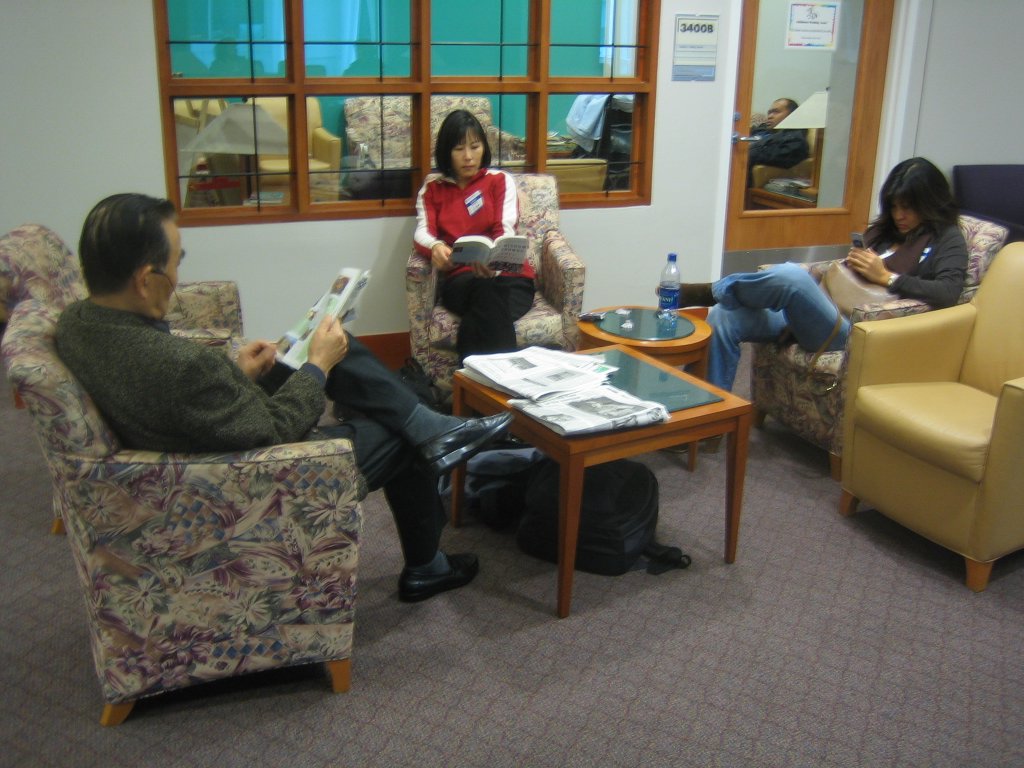
They told us that the OR nurse was going to call us every hour or so to give us an update on how things are going. The first update came around 8:30am. The nurse said that my mother was doing fine and that she would call again in about an hour or so unless the operation was over in which case Dr. Cameron would come speak to us. We knew that it would be very bad if Dr. Cameron came out early as that probably meant that they had aborted the Whipple. It's only after they open up the patient when they make the final determination if the tumor is resectable. So the next phone call was nerve racking. At 10:10am the nurse called again and we all looked at each other since nobody really wanted to take it. My sister Linda went to take the call. When she was on the phone she looked upset so I was really worried. But she came back and said that everything was going fine and they were going to proceed with the Whipple! We were all unbelievably relieved.
After about 6 hours into the surgery Dr. Cameron came out and found us. He was in his green surgical outfit. He said that everything went very well and that as far as he could tell they had removed the entire tumor. I guess they do some pathology tests as they are removing the tumor to ensure that everything was removed. He said they removed about 1/3 of my mother's pancreas and about 1/3 of her stomach. We thanked Dr. Cameron profusely. We were told we could see our Mother in the ICU in a few hours after they closed her up.
My mother spent two nights in the ICU. When we first saw her she was in a lot of pain and also was suffering from a lot of nausea. We had one big scare where her hemoglobin levels were very low and they thought that it was either a faulty test or that it could be internal bleeding. The surgeons were ready to go back in if it was the latter case. Thankfully, the test turned out to have been wrong and a different kind of test confirmed her levels were OK. By the third day she was actually looking reasonably good and we were all happy that she was doing so well.
Tuesday, November 22, 2005
Consultation with Dr. Cameron
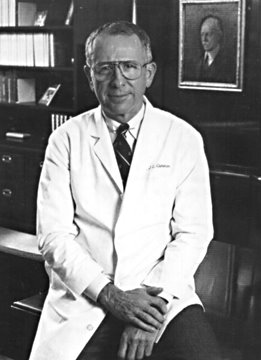 I called Dr. Canto's assistant on Monday to make sure she had done
the referral to Dr. Cameron. Bonnie, Dr. Cameron's very nice and helpful
assistant called me early Tuesday to schedule. She mentioned that Dr.
Cameron's first available appointment was on November 29. I mentioned
that we were feeling under some time pressure since diagnosis was so
late and asked if there was anything that might open up earlier. She
said she would check and call me back later in case there was a cancellation.
Bonnie called back around 10 am and mentioned we could see Dr. Cameron
today! I learned that it always helps to push and be creative with respect
to scheduling - there are often cancellations or other ways to expedite
getting an appointment.
I called Dr. Canto's assistant on Monday to make sure she had done
the referral to Dr. Cameron. Bonnie, Dr. Cameron's very nice and helpful
assistant called me early Tuesday to schedule. She mentioned that Dr.
Cameron's first available appointment was on November 29. I mentioned
that we were feeling under some time pressure since diagnosis was so
late and asked if there was anything that might open up earlier. She
said she would check and call me back later in case there was a cancellation.
Bonnie called back around 10 am and mentioned we could see Dr. Cameron
today! I learned that it always helps to push and be creative with respect
to scheduling - there are often cancellations or other ways to expedite
getting an appointment.
Mom, Dad, Grace and I drove back over to JHH for our second visit. Dr. Cameron sees patients at the outpatient center across from the McEldery garage. It was very empty in the waiting room probably due to the holidays. We waited in the examination room and Dr. Cameron came in and introduced himself. He went over my Mom's history with her and she mentioned that she was shocked and never expected this to happen to her. He said that nobody ever does. She asked if there was any hope and he replied: "Sure, there's hope!". We had a really great impression of Dr. Cameron - he seemed very confident and very sharp which was exactly what we wanted to see.
Dr. Cameron looked over her file and said she was a candidate for the Whipple! He said: "How about next Tuesday?". I was unbelievably relieved to hear this. On the other hand I think we were all stunned that scheduling it could be so simple and that it would happen so soon. So we went back home to spend the week together and prepare for the surgery. My father mentioned that we should pray that Dr. Cameron would not have some kind of stressful Thanksgiving family reunion and that he would come back relaxed and well rested for our mother's surgery.
Friday, November 18, 2005
EUS and CT Scan with Dr. Marcia Canto
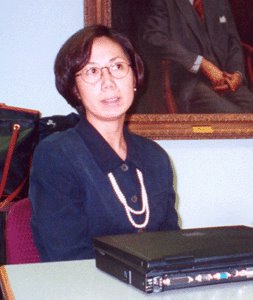 Dr. Canto is a
screening specialist for pancreatic cancer. She is from the Philippines
and graduated from the University of the Philippines. We immediately felt
a connection to her because our family lived for many years in Manila.
Dr. Canto is a
screening specialist for pancreatic cancer. She is from the Philippines
and graduated from the University of the Philippines. We immediately felt
a connection to her because our family lived for many years in Manila.
We arrived at JHH on the morning of the 18th and went to the 5th floor of Blalock. My mother had the EUS (Endoscopic Ultrasound) and was very nauseous after the procedure. They had given her morphine for pain and she really didn't react well to this. We then went to the basement for her CT scan and returned to wait to hear from Dr. Canto. Prior to the procedure Dr. Canto had asked my mother about her symptoms. She then mentioned not to worry about the procedure and that perhaps it was not even cancer. I think my mother secretly clung to this hope as we patiently waited for Dr. Canto to arrive with the results.
We waited a long time in a small consultation room and I was worried that this meant bad news. Dr. Canto finally arrived and confirmed that it looked like pancreatic cancer (adenocarcinoma). She mentioned the tumor was about 3.5 cm - larger than we had originally thought. However, she added that the cancer looked resectable which is excellent news as far as these things go. We told her we had already been in contact with a Hopkins surgeon but we asked her who she would recommend. She said: "If it was my mother, I would go with Dr. Cameron". In our initial discussions with the Hopkins surgical assistants, we had heard that once you choose a surgeon you cannot switch. We mentioned this to Dr. Canto and she said it was not a problem and that it happens all the time. She said she would refer us to Dr. Cameron! That was great news and we were happy with that decision. As Dr. Canto departed, Grace said "Salamat Po" which means "Thank You" in Filipino. Although my mother felt really nauseous all day, I think we felt guardedly optimistic that my mother could have the Whipple procedure.
On Monday, Dr. Canto's very kind assistant faxed over a copy of my mother's reports and confirmed that she had referred us to Dr. Cameron. Her CA 19-9 was 801.7. We also received the CT results which stated:
Large mass in head of pancreas consistent with pancreatic cancer with dilated pancreatic duct seen. Tumor appears to extend into the peripancreatic soft tissues. The patient's mass abuts the SMV and the portal vein but there is no definite evidence of invasion seen. Encasement of gastroduodenal artery defined.We weren't sure how to interpret the results but we thought this might put my mother at a Stage III which was worse than we initially hoped for. However, the results seemed to indicate she may still be resectable. In retrospect, going through Dr. Canto for the initial screening and tests was exactly the right thing to do. She had ordered the 3D CT scan (pancreatic protocol) and the EUS and was able to give us a referral to the surgeon we wanted. I believe that any surgeon at the very least would have required a 3D CT scan so going through the screening department first was time not wasted.
1. Mass at the head of the pancreas compatible with pancreatic cancer. Minimal stranding of the mesenteric fat anterior to the mass, suspicious for tumor infiltration. Tumor involvement of the posterior wall of the gastric antrum cannot be excluded.
2. The splenic vein, portal vein, and celiac axis, and SMA are patent. The SMV is patent, but in very close proximity to the mass and possibly minimally compressed.
I think our mother went through another small bout of depression since we had more results showing that it was pancreatic cancer.
Subscribe to:
Posts (Atom)